Somewhere along the way, “getting healthier” started to mean overhauling your entire life overnight — new diet, new workout schedule, new supplements, new everything, all starting Monday.
It’s no wonder so many of us start strong and burn out within two weeks. Total overhauls are hard to sustain because they demand more willpower than most schedules, or nervous systems, can consistently provide.
Here’s the good news: you don’t need to change everything to become healthier. You need a few small, sustainable habits — chosen deliberately, built gradually — that fit into the life you already have.
This guide walks through how to build a healthier lifestyle one realistic layer at a time, without needing to throw out everything that currently works for you.
Why All-or-Nothing Health Plans Usually Fail
Extreme health overhauls tend to collapse for a predictable reason: they require too much change, too fast, with no room for real life.
A few common patterns:
- Trying to fix nutrition, exercise, sleep, and stress all in the same week
- Relying purely on motivation, which naturally fades after the first few days
- Treating one “bad” day as a reason to quit entirely, rather than simply continuing
Common mistake: believing that if a habit isn’t done perfectly, it isn’t worth doing at all. In reality, a habit done imperfectly and consistently will always outperform a “perfect” plan abandoned after a week.
The Four Areas That Matter Most
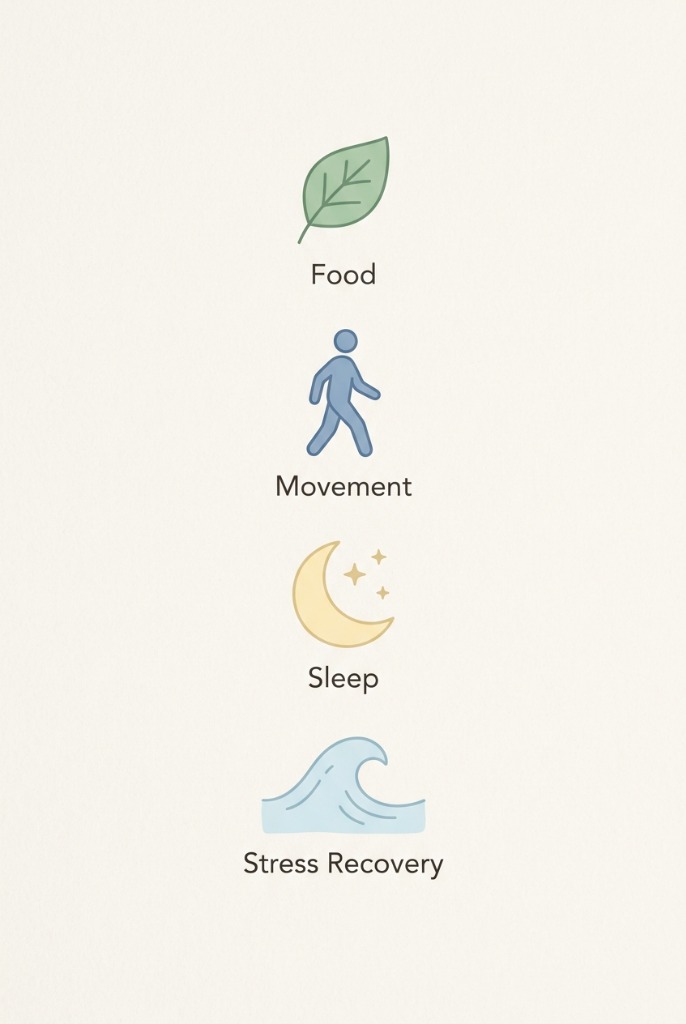
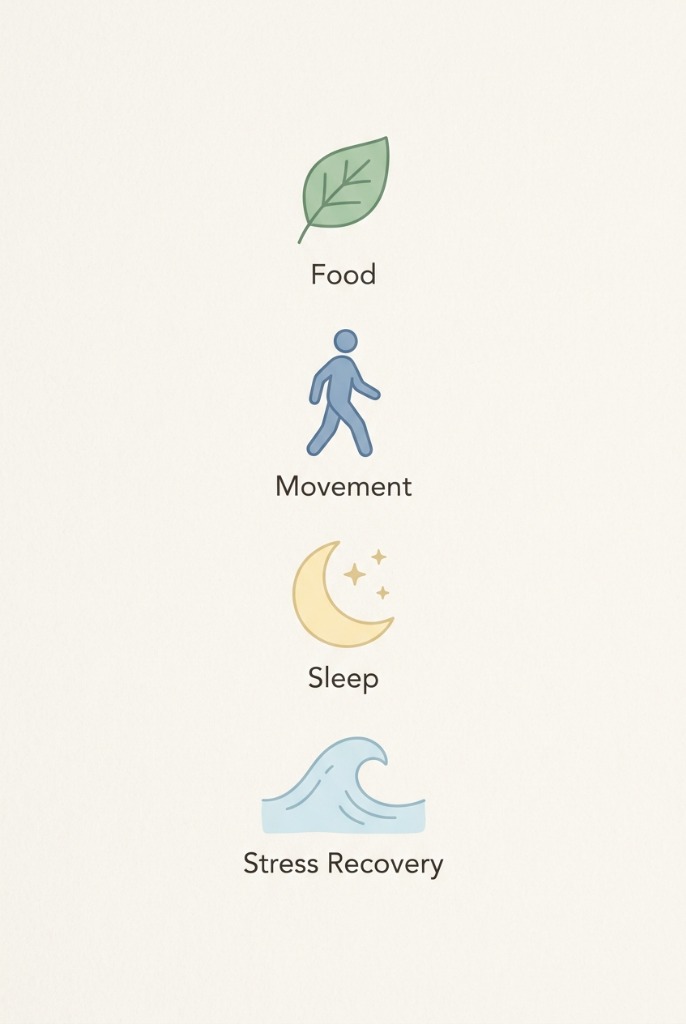
Rather than trying to improve everything at once, healthy living tends to rest on four core areas:
- Food — how you nourish your body day to day
- Movement — how often you move, not necessarily how intensely
- Sleep — the foundation that affects almost everything else
- Stress — how well your nervous system gets to recover
You don’t need to overhaul all four. Improving even one, consistently, tends to positively affect the others.
Small, Sustainable Food Habits

Healthy eating doesn’t require cutting out entire food groups or following a rigid meal plan. It usually starts with small shifts in what’s already on your plate.
Start With Addition, Not Restriction
Instead of asking “What do I need to cut out?” try asking “What can I add?”
- Add one vegetable to a meal you already make regularly
- Add a source of protein to breakfast instead of skipping it
- Add a glass of water before your morning coffee
Addition feels far less restrictive than elimination, and it naturally crowds out less nourishing choices over time — without requiring willpower-heavy rules.
Keep a Few “Easy Defaults” on Hand
Decision fatigue is one of the biggest reasons healthy eating falls apart during busy weeks. Having 2–3 simple, healthy go-to meals removes the need to decide from scratch every time.
Examples:
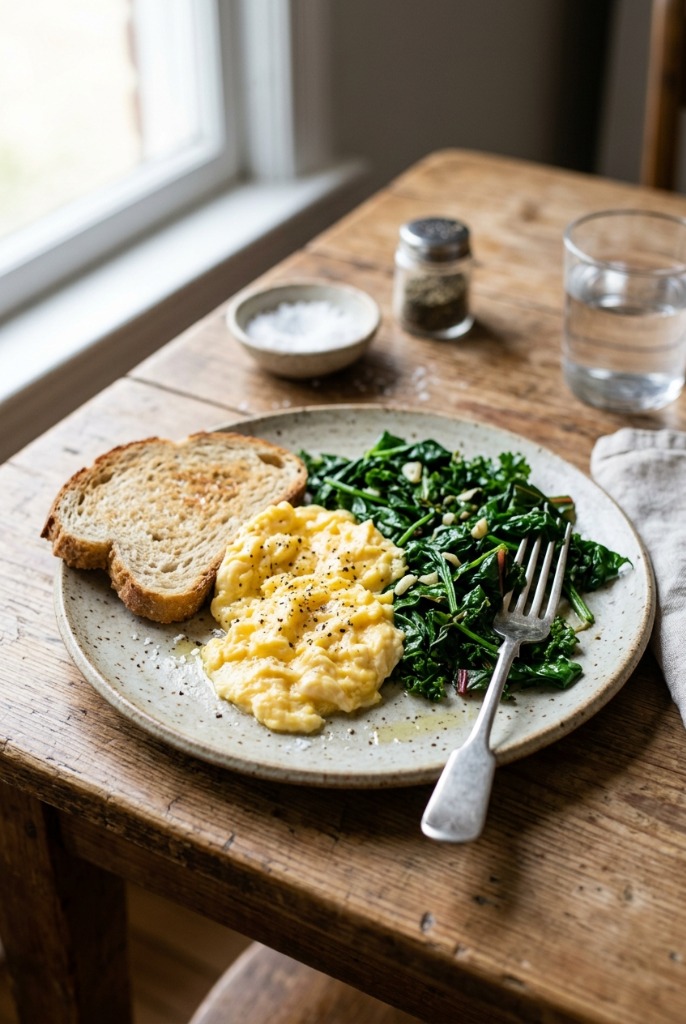
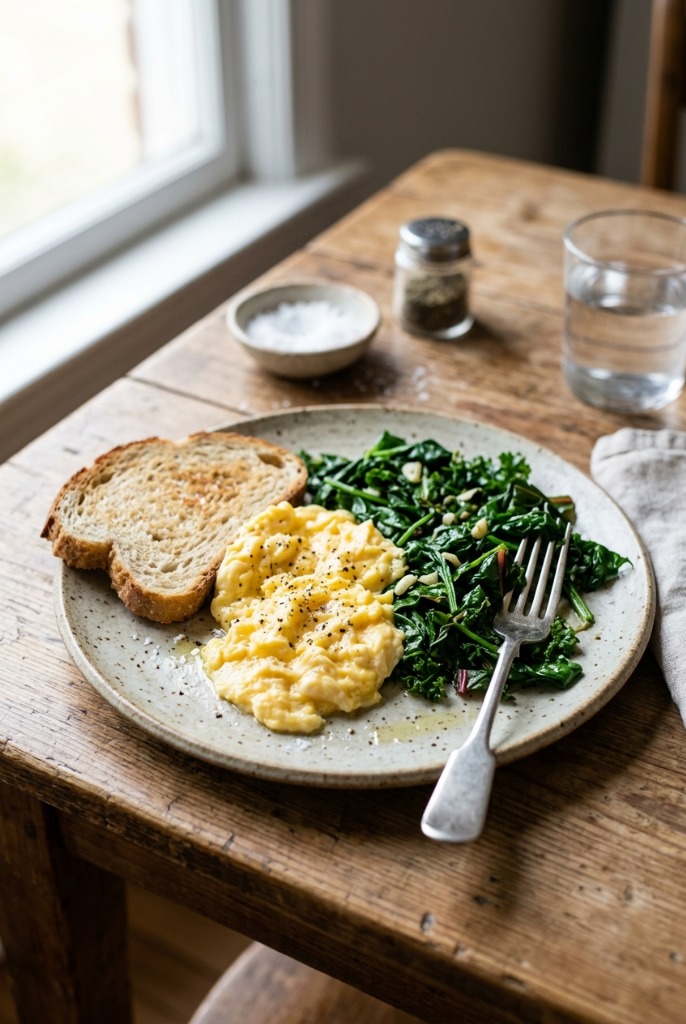
- Eggs, greens, and toast
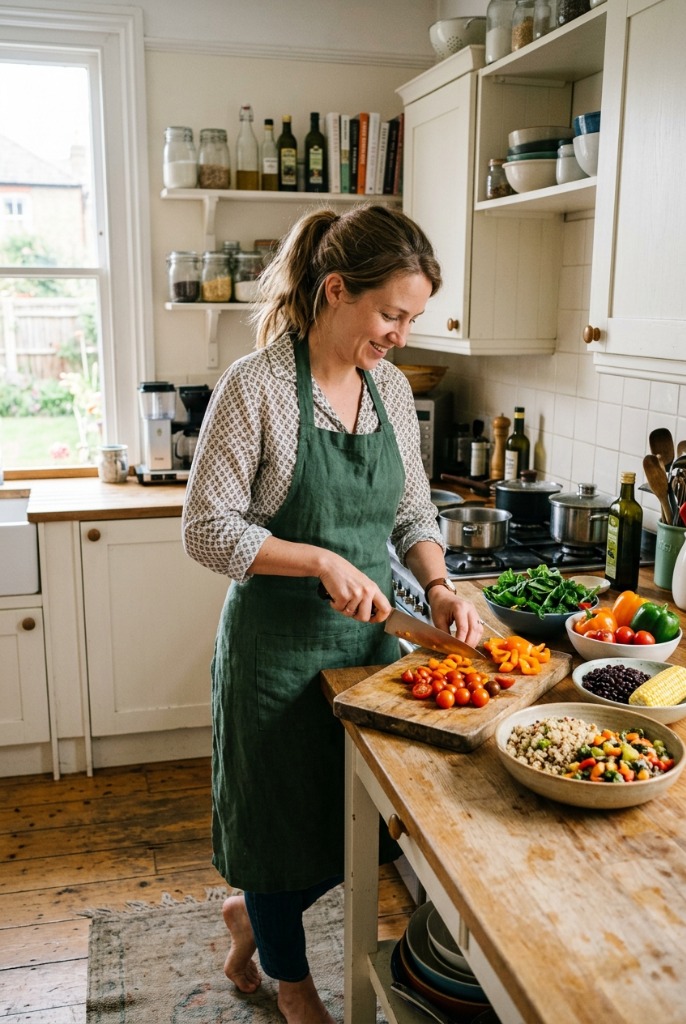
- A grain bowl with whatever vegetables and protein are on hand
- A simple soup or stir-fry you can make without a recipe
What to Do When Motivation Is Low
On low-energy days, aim for “good enough,” not “perfect.”
- Instead of cooking from scratch, choose a simple, minimally processed option
- Instead of a full meal, prioritize one nourishing element, like a piece of fruit or a handful of nuts
- Remind yourself that one meal doesn’t define your health — the pattern over weeks does
Movement That Doesn’t Require a Gym Membership

Exercise culture often implies that movement only “counts” if it’s intense, scheduled, and sweat-inducing. In reality, consistent, moderate movement is far more sustainable — and still meaningfully beneficial.
Choose Movement You Don’t Dread
The best form of movement is the one you’ll actually keep doing. This might be:
- A daily walk, with or without a destination
- Stretching for ten minutes while listening to a podcast
- Dancing in your kitchen while cooking
- A short home workout you enjoy, rather than one you feel obligated to do
Attach Movement to an Existing Habit
Instead of trying to “find time” to exercise, attach it to something you already do:
- Stretch while your coffee brews
- Walk during a phone call instead of sitting
- Take the stairs when it’s realistic to do so
Common Mistake: All-or-Nothing Movement Thinking
Skipping a planned workout doesn’t cancel your progress — it’s just one missed session. The habit that matters is the pattern over time, not any single day.
Protecting Sleep as a Foundation

Of the four areas, sleep tends to have the widest ripple effect — on energy, mood, appetite, and motivation for everything else.
Build a Simple Wind-Down Cue
Rather than overhauling your whole evening, choose one small cue that signals to your body it’s time to slow down:
- Dimming the lights an hour before bed
- Putting your phone in another room 20 minutes before sleep
- A short, repeatable routine, like washing your face and reading a few pages
Keep Bed and Wake Times Reasonably Consistent
Going to bed and waking up around the same time, even on weekends, tends to support more stable energy than chasing extra sleep inconsistently. Small, steady consistency matters more than trying to “catch up” on rest.
Managing Stress as Part of Healthy Living

Stress is often left out of healthy living conversations, even though it directly affects sleep, appetite, energy, and motivation. A truly healthier lifestyle includes tending to your nervous system, not just your plate or your step count.
Build in Small Recovery Moments
- A few minutes of quiet before checking your phone in the morning
- A short walk outside during a stressful day
- A brief pause between tasks instead of moving straight from one to the next
Notice What You’re Using to Cope
Without judgment, it can help to notice what you naturally reach for during stress — food, scrolling, overworking — simply as information, not as something to immediately fix. Awareness alone often creates the first small shift.
How to Build This Without Overwhelming Yourself
You don’t need to start all four areas at once. A slower approach tends to last longer.
A simple starting rhythm:
- Week 1–2: Choose one small food habit to add
- Week 3–4: Add one form of enjoyable movement
- Month 2: Build a simple wind-down cue for sleep
- Month 3: Add one small stress-recovery habit
By the time you’ve layered all four, none of them will have felt like a dramatic overhaul — because they weren’t.
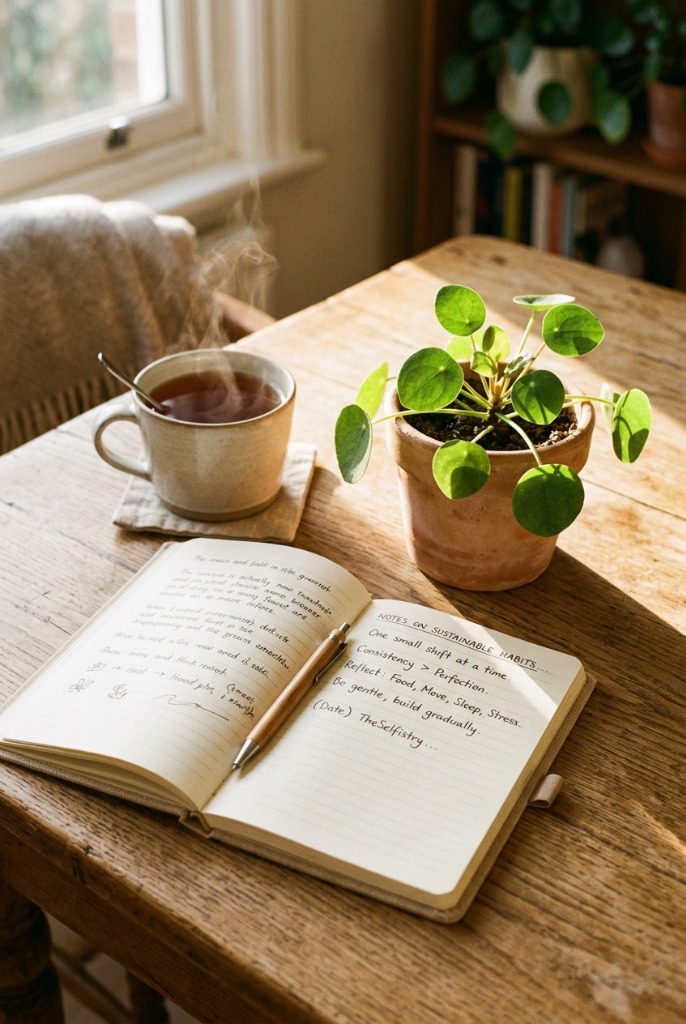
A little reminder from TheSelfistry
You don’t need to become an entirely different person to live a healthier life. You need a few small, honest habits, chosen because they fit you — not because they looked impressive on someone else’s routine.
Progress here isn’t about being perfect on any single day. It’s about the pattern you build slowly, one small choice at a time, without needing to change everything all at once.
A Final Thought
A healthier lifestyle doesn’t require an extreme overhaul — it requires a few sustainable habits across food, movement, sleep, and stress, built gradually rather than all at once. Starting small and staying consistent will always outperform a “perfect” plan that collapses after a week.
You don’t need to change everything. You just need to begin with one small, doable shift — and let the rest build from there.
Frequently Asked Questions
Start with one small habit in a single area — food, movement, sleep, or stress — rather than trying to change everything at once. Consistency in one area often positively influences the others, making the next step feel more natural when you’re ready to add it.
Missing a day or a week doesn’t erase your progress. Simply return to the habit without treating the lapse as a reason to abandon it entirely. The pattern over weeks matters far more than any single day.
No. Consistent, moderate movement — like walking or stretching — offers meaningful benefits and is often more sustainable than intense workouts you don’t enjoy. The best exercise is the one you’ll actually keep doing.
This varies by person, but small, consistent habits generally start to feel more automatic after a few weeks of regular practice. Reducing friction — keeping healthy options visible and accessible — helps speed this up considerably.
Yes. Focusing on one area, like sleep or movement, before adding another often leads to more sustainable results than trying to overhaul everything simultaneously. Each area you strengthen makes the others easier to maintain.
You might also enjoy reading
- The Ultimate Self-Care Routine for Busy Women
- How to Practice Mindfulness When Your Mind Won’t Slow Down
- Simple Evening Wind-Down Routine for Better Sleep
- Gentle Productivity: How to Get Things Done Without Burning Out
- You Don’t Need to Have Your Life Figured Out Yet