

Somewhere along the way, many of us absorbed the idea that by a certain age, life is supposed to look a certain way. A clear career path. A settled relationship status. A five-year plan you actually believe in.
And when it doesn’t look like that — when you’re still figuring out what you want, still changing your mind, still not entirely sure what’s next — it can feel like everyone else got a map you somehow missed.
Here’s something worth sitting with: not having your life figured out isn’t a sign that you’re behind. It’s usually a sign that you’re paying attention, still growing, and refusing to settle into a version of life that doesn’t actually fit you.
This isn’t about lowering your standards for yourself. It’s about separating “uncertain” from “unsuccessful” — because they were never the same thing.

Why “Having It Figured Out” Is a Myth for Almost Everyone
Very few people are as certain as they appear. Most are simply better at looking settled — updating their direction quietly, in private, while the outside world only sees the finished result.
A few reasons the pressure feels so intense:
- Social media shows curated milestones, not the uncertainty behind them
- Certain ages get treated like deadlines, even though timelines vary enormously from person to person
- We compare our internal experience (messy, uncertain) to other people’s external presentation (polished, confident)
The comparison was never fair to begin with. You’re measuring your behind-the-scenes against someone else’s highlight reel.
The Difference Between “Lost” and “In Progress”

Feeling uncertain about your direction doesn’t mean you’re lost. It often means you’re in progress — actively updating what you want as you learn more about yourself.
A few signs you’re growing, even without a clear plan:
- You’ve outgrown things that used to feel right
- You’re asking better questions about what you actually want, not just what you’re supposed to want
- You’re less willing to settle for things that don’t feel aligned, even if they’d be easier
These aren’t signs of falling behind. They’re signs of becoming more yourself — which rarely happens on a predictable timeline.
Why the Pressure to Have a Plan Can Backfire
Ironically, chasing certainty too hard can slow growth down rather than speed it up.
Common mistake: trying to lock in a five-year plan before you’ve gathered enough real experience to know what you actually want. This often leads to picking a direction out of anxiety — just to have something decided — rather than out of genuine alignment.
Uncertainty, uncomfortable as it is, often means you’re leaving room to choose something that actually fits, instead of settling early just to feel resolved.
How to Keep Growing Without Having It All Figured Out
You don’t need a finished plan to move forward. You need small, honest steps — taken one at a time.
1. Trade the Big Question for a Smaller One
Instead of asking, “What am I doing with my life?” — which is enormous and rarely answerable in one sitting — try asking:
- “What’s one thing I want to try or learn this month?”
- “What’s something I’ve been avoiding that might tell me more about what I want?”
- “What would I explore if I weren’t worried about picking ‘the right’ path?”
Smaller questions are easier to actually answer, and the answers tend to add up over time.
2. Pay Attention to What Energizes You

You don’t need a five-year plan to notice patterns. Start tracking, even loosely, what genuinely lights you up versus what drains you — conversations, tasks, environments, people.
Over weeks and months, this becomes real data about your direction, gathered through experience rather than pressure.
3. Let Go of the Idea That Changing Your Mind Is Failure
Choosing a path and later changing it isn’t wasted time. It’s information. Almost everyone who eventually finds something that fits has, at some point, tried something that didn’t.
If you’ve changed direction before, that’s not a mark against you — it’s part of how most meaningful growth actually happens.
4. Take the Next Right Step, Not the Whole Staircase
When the full path feels unclear, you often only need to see the next step, not the entire journey.
Example: If you’re unsure about your career direction, the next step might simply be having one honest conversation with someone in a field you’re curious about — not choosing an entirely new career overnight.
5. Notice the Difference Between Fear and Genuine Misalignment
Sometimes uncertainty is fear of change. Sometimes it’s a real sign that something isn’t right for you. It helps to gently ask:
- “Am I hesitant because this feels wrong, or because it feels unfamiliar?”
- “Would I still feel uncertain if I weren’t afraid of getting it wrong?”
There’s no perfect way to always know the difference — but asking the question is often enough to get more clarity than you had before.
What to Do When Motivation Feels Low
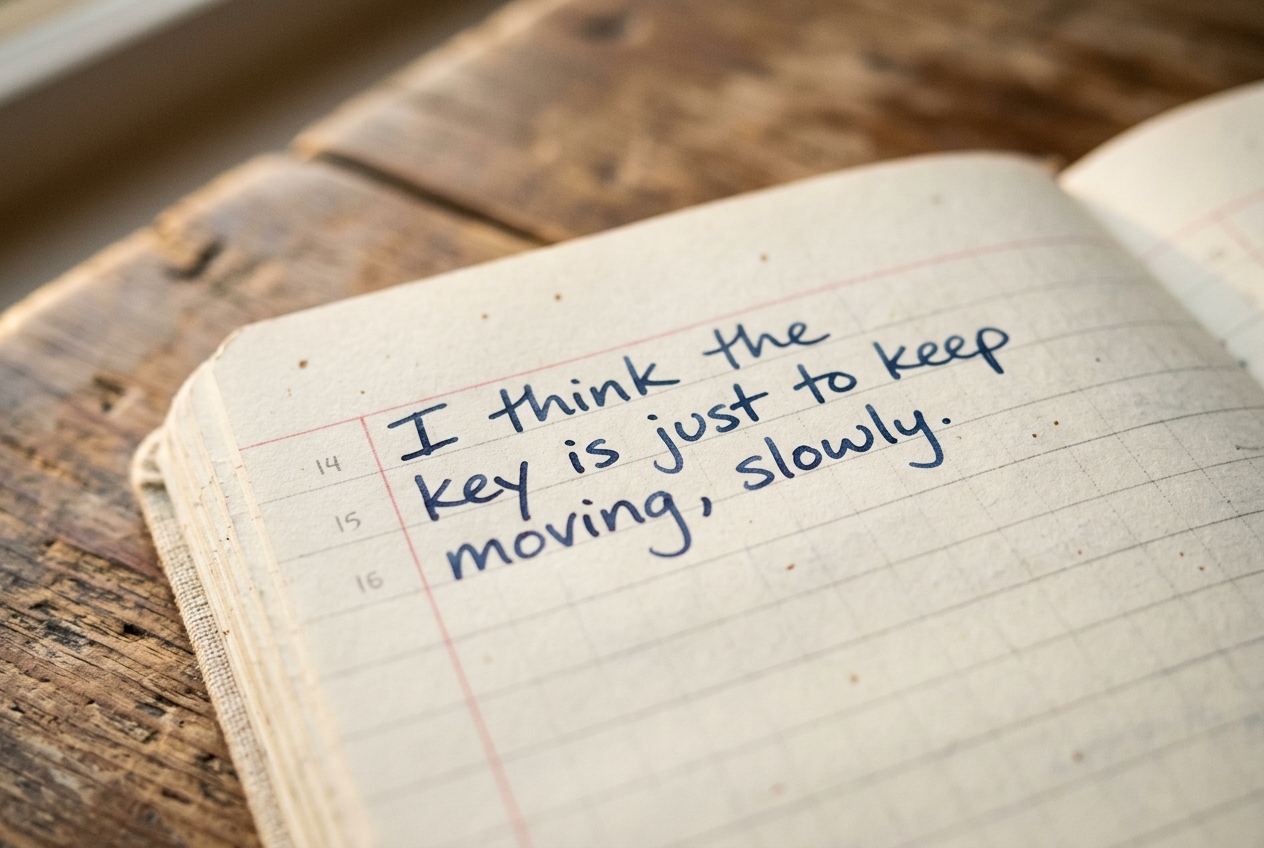
On the days when uncertainty feels heavier than usual, you don’t need a big breakthrough. You need something small and doable.
- If a full journaling session feels like too much, write one honest sentence about how you’re actually feeling
- If planning your next step feels overwhelming, do one tiny, low-stakes action related to something you’re curious about
- If comparison is creeping in, take a short break from the source — a scroll, a conversation, a habit — that’s fueling it
Progress doesn’t require momentum every single day. It only requires that you don’t fully stop.
A little reminder from TheSelfistry
You are allowed to be a work in progress. You are allowed to change your mind, take longer than expected, and still be figuring things out while living a full, meaningful life in the meantime.
Not having it all figured out doesn’t mean you’re doing life wrong. It often means you’re doing the harder, more honest thing — staying open, instead of settling early just to feel resolved.
A Final Thought
If your life doesn’t look like a finished plan right now, you’re in good company — most people’s inner experience is far less certain than their outward appearance suggests. Growth doesn’t require a fixed direction. It requires small, honest steps, taken even when the full picture isn’t clear yet.
You don’t need to have it all figured out today. You just need to keep moving, gently, toward what actually feels like yours.
Frequently Asked Questions
Yes. Many people continue refining their direction well beyond the timelines society implies are “normal.” Uncertainty at any age is common, even if it isn’t often talked about openly. You are not behind — you’re simply still in motion.
Try limiting exposure to comparison triggers when you notice they affect your mood, and remind yourself you’re only seeing someone else’s outward presentation, not their internal experience. What looks like certainty from the outside is often just privacy about the uncertainty.
Changing direction isn’t a failure — it’s often how people eventually find something that genuinely fits. Each attempt usually provides useful information, even when it doesn’t work out. The capacity to change your mind is a strength, not a flaw.
Focus on small, next-right steps instead of the entire path. Trying one small thing, having one honest conversation, or asking one smaller question can move you forward without requiring full certainty. Progress is still progress, even when it’s quiet.
No. Feeling behind is often a comparison-based feeling, not an accurate reflection of your actual progress. Growth doesn’t follow a universal timeline, and the fact that you’re asking the question at all usually means you’re more engaged with your own growth than you realise.
You might also enjoy reading
- The Ultimate Self-Care Routine for Busy Women
- How to Practice Mindfulness When Your Mind Won’t Slow Down
- How to Set Boundaries Without Feeling Guilty
- Gentle Productivity: How to Get Things Done Without Burning Out
- How to Stop Comparing Yourself to Others (Without Pretending You Don’t)