
“Mindful living” gets used often enough that it can start to feel like a vague, Pinterest-friendly phrase — something to do with candles, journals, and slower mornings, without a clear sense of what it actually means or how to begin.
Here's a simpler way to understand it: mindful living isn't a single practice, a specific routine, or something you either have or don't. It's a way of moving through ordinary life with a bit more attention and a bit less autopilot — noticing more of what you're doing, feeling, and choosing, instead of rushing past it.
This guide is meant as a genuine starting point — what mindful living actually means, the core areas it touches, and simple, realistic ways to begin, without needing to overhaul your entire life to do it.

What Mindful Living Actually Means
At its core, mindful living means bringing intentional attention to ordinary moments, rather than moving through them on autopilot.
It's not the same as meditation, though meditation can be one part of it. Meditation is a dedicated practice, usually done for a set period of time. Mindful living is broader — it's about how you approach your everyday life as a whole: your mornings, your conversations, your reactions, your rest.
A few things mindful living is not:
- A single routine you either follow perfectly or fail at
- The same as being calm all the time
- Something that requires eliminating stress, busyness, or difficult emotions entirely
A few things mindful living is:
- Noticing more of your daily experience, rather than rushing through it unaware
- Responding to situations with a bit more awareness, rather than pure reaction
- Making space for presence, even briefly, inside a full and ordinary life
Why Mindful Living Matters
Without any intentional attention, days tend to blur together — routines happen on autopilot, reactions happen automatically, and time seems to move faster than it should. Mindful living interrupts that pattern, even in small ways.
A few of the benefits people commonly notice:
- A greater sense of presence in everyday moments, rather than constantly living ahead of or behind the present
- More awareness of automatic reactions, which creates space to respond more intentionally
- A softer, less rushed feeling to ordinary days, even when the schedule itself doesn't change
These shifts tend to build gradually, through small, repeated attention, rather than all at once.
The Core Pillars of Mindful Living
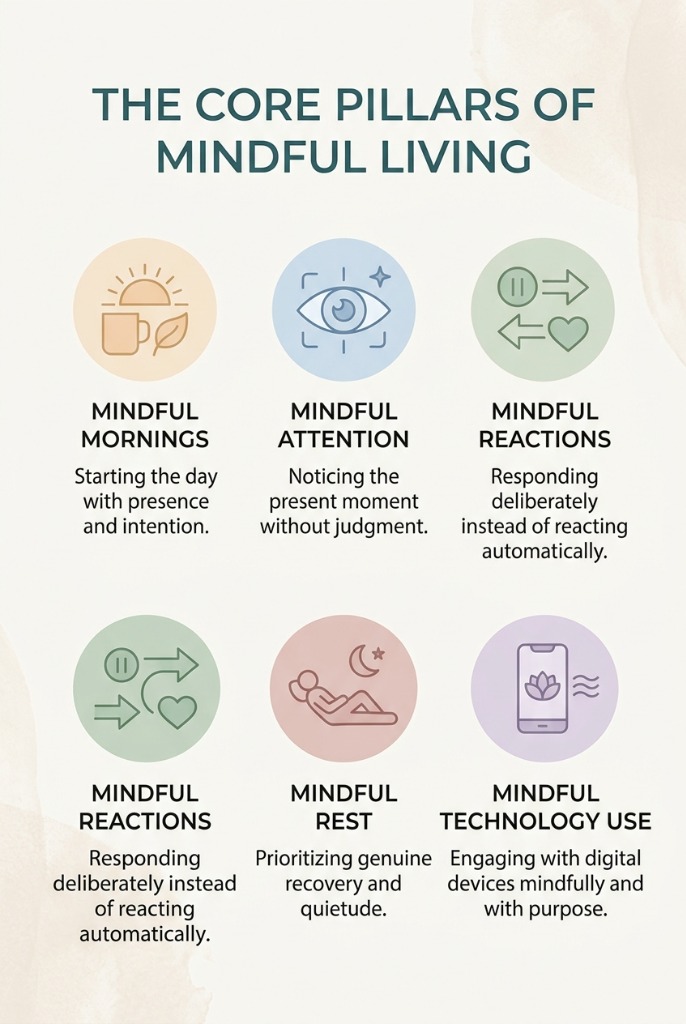
Mindful living tends to touch a few key areas of daily life. You don't need to master all of them at once — even attention in one area creates a noticeable shift.
1. Mindful Mornings
How you begin the day often sets its emotional tone. A mindful morning doesn't require an elaborate routine — it simply means giving yourself a few unhurried minutes before diving into tasks, notifications, or demands.
2. Mindful Attention
This is the heart of mindful living: noticing what you're doing while you're doing it, rather than operating on autopilot. It applies to small moments — a meal, a walk, a conversation — as much as it does to larger decisions.
3. Mindful Reactions
Rather than responding to stress, frustration, or discomfort purely automatically, mindful living involves a small pause — noticing the reaction before acting on it, which often changes how you respond.
4. Mindful Rest
Genuine rest requires presence, not just the absence of activity. Mindful living includes noticing when you actually need to slow down, rather than pushing through until you collapse from exhaustion.
5. Mindful Technology Use
Given how much of daily life now involves screens and constant connectivity, mindful living also includes noticing how and when you engage with technology, rather than reaching for it purely out of habit.
How to Start Living More Mindfully

1. Start With One Small Daily Moment
Rather than trying to apply mindfulness to your entire day, choose one small, recurring moment to bring full attention to — your morning coffee, a walk, brushing your teeth.
2. Notice Instead of Judge
When you notice you've been on autopilot, or reacted automatically to something, try simply noticing it without harsh self-judgment: “I wasn't really present there.” Awareness itself is progress, even without immediate change.
3. Build In Small Pauses
Adding brief pauses between tasks — even ten to fifteen seconds — creates natural opportunities to check in with yourself throughout the day, rather than moving from one thing to the next without any space in between.
4. Reduce, Rather Than Eliminate, Distraction
You don't need to remove all stimulation from your life. Start by reducing background noise or multitasking during one specific part of your day, and notice the difference it makes.
5. Be Patient With the Process
Mindful living is a practice, not a destination you arrive at and then maintain perfectly. Some days will feel more present than others, and that's a normal part of how this works, not a sign you're doing it wrong.
Common Misconceptions About Mindful Living
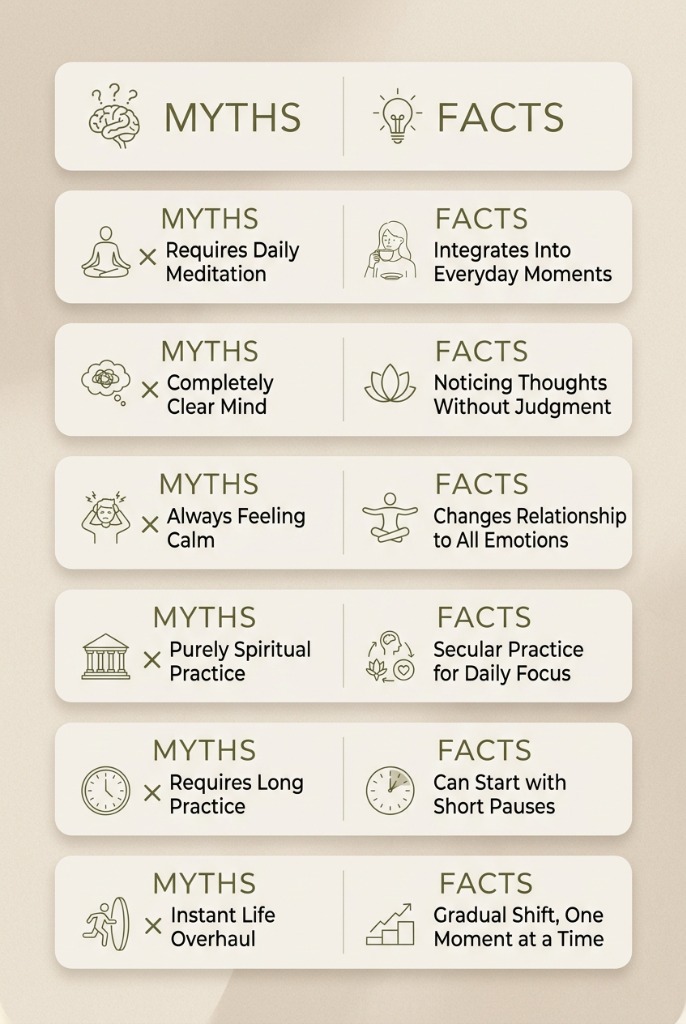
“I need to meditate every day to live mindfully.” Meditation can support mindful living, but it isn't required. Many people build meaningful mindful habits without ever adopting a formal meditation practice.
“Mindful living means being calm all the time.” Mindfulness doesn't eliminate stress, frustration, or difficult emotions — it simply changes your relationship to them, making space to notice and respond, rather than purely react.
“I have to completely change my lifestyle to live mindfully.” Mindful living can be built through small, incremental shifts within your current life. It doesn't require a dramatic overhaul.
What to Do When Mindful Living Feels Difficult
Some days, weeks, or seasons make presence genuinely harder — during high stress, big transitions, or simply exhausting stretches of life. On those days:
- Lower your expectations to the smallest possible version, even a single mindful breath
- Remember that noticing you've been distracted is itself a moment of mindfulness, not a failure of it
- Return to the practice without needing to “catch up” on days you missed
A little reminder from TheSelfistry
Mindful living isn't about achieving a permanently calm, present state. It's about returning, again and again, to a little more attention than you had a moment ago. Some days that will come easily. Other days, it will take real effort — and both are simply part of the practice.
You don't need to live mindfully all day, every day, for it to matter. You just need a few more present moments than you had before.
A Final Thought
Mindful living is less about a specific routine and more about a gradual shift in how you move through ordinary life — with a bit more attention, a bit less autopilot, and more space to notice what's actually happening. By starting small, in just one area of daily life, you can begin building a more mindful way of living without needing to overhaul everything at once.
You don't need to have it all figured out to begin. You just need one small, present moment — and then another.
Frequently Asked Questions
Meditation is a specific, dedicated practice, usually done for a set period. Mindfulness is broader — it's a way of bringing attention to ordinary moments throughout your day, with or without a formal meditation practice.
No. Mindful living can begin with just one small daily moment, like a mindful cup of coffee or a short walk, without requiring extra time in your schedule.
No. Mindful living doesn't eliminate stress or difficult emotions. It simply creates more space to notice and respond to them, rather than reacting automatically.
This varies by person, but many people notice small shifts, like feeling more present or less rushed, within a few weeks of consistent, small practice.
This is completely normal, especially at the beginning. Try attaching mindfulness to something you already do daily, like a meal or a commute, to make it easier to remember.
You might also enjoy reading
- How to Practice Mindfulness When Your Mind Won't Slow Down
- How to Stop Living on Autopilot
- 10 Simple Mindfulness Practices for Everyday Life
- How to Be More Present in a World That Never Stops
- How to Create a Slower, Softer Life