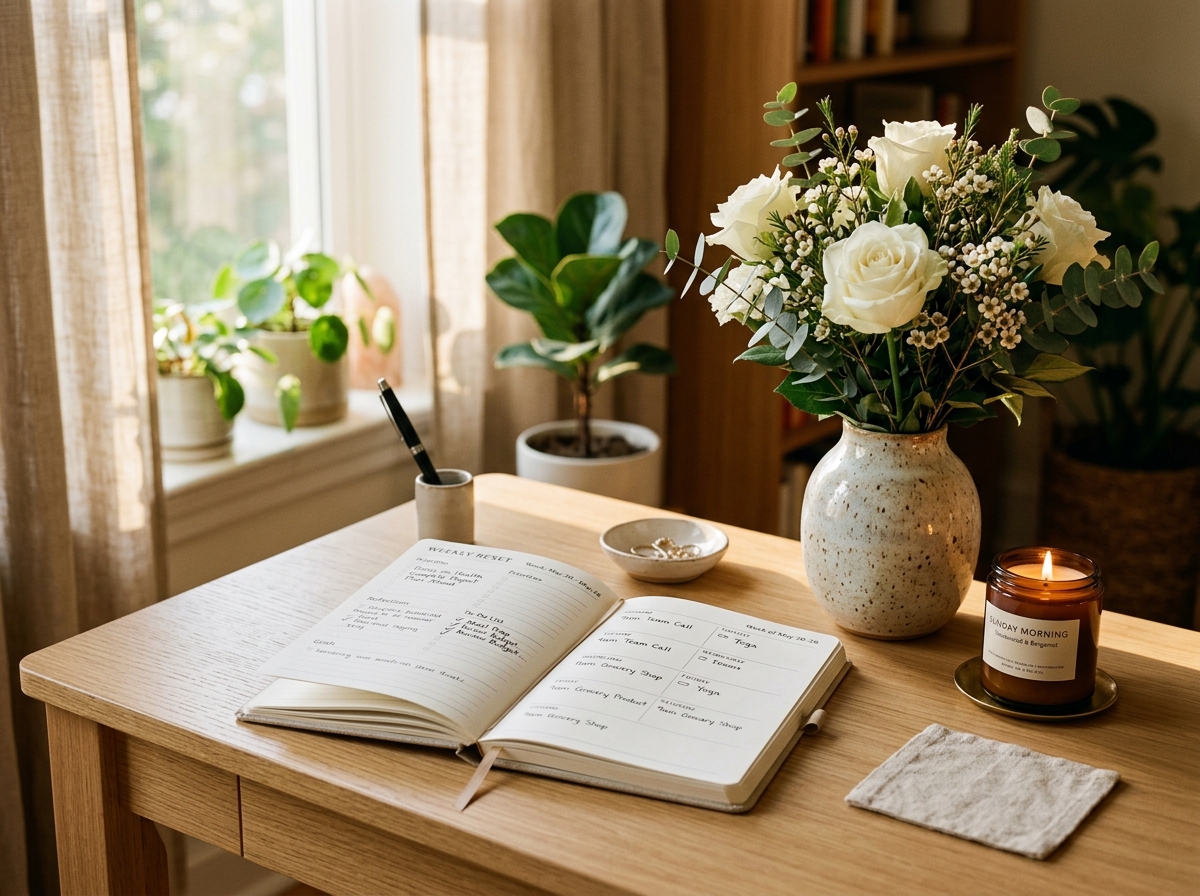

If the phrase "self-care routine" makes you picture a woman with unlimited free time, a spotless kitchen, and a two-hour bath — you're not alone in feeling like self-care wasn't designed for people with actual schedules.
Between work, family, errands, and the mental load of simply keeping life running, "take time for yourself" can feel like advice from someone who has never seen your calendar.
Here's the truth: self-care doesn't have to be elaborate to be effective. The women who feel most steady and cared-for aren't the ones with the most spare time — they're the ones who've built small, repeatable habits into the life they already have.
This guide breaks self-care into three realistic layers — daily, weekly, and monthly — so you can build a routine that fits into your actual life, not an idealized version of it.
Why "More Time" Isn't the Real Problem
Most busy women don't need more hours in the day. They need a different relationship with the hours they already have.
Self-care gets postponed not because it isn't important, but because it usually isn't urgent. Deadlines, kids' needs, and other people's requests will always feel more pressing in the moment — which means unless self-care is built into your routine on purpose, it quietly gets pushed to "someday."
The goal isn't to find an extra hour. It's to protect small pockets of time that already exist — and treat them as non-negotiable.
The Three Layers of a Realistic Self-Care Routine
A sustainable routine works best when it's layered, not crammed into one overwhelming daily checklist. Think of it in three parts:
- Daily micro-habits — small, low-effort things woven into your existing routine
- Weekly rituals — slightly longer moments you protect once or twice a week
- Monthly resets — a bigger check-in to realign and recharge
You don't need to do all three perfectly every week. Even doing the daily layer consistently will change how you feel.
Daily Self-Care Habits (5–15 Minutes)
These are the habits that matter most, simply because they happen most often. Small and consistent beats big and occasional.
Start With One Anchor Habit
Instead of trying to overhaul your entire morning or evening, pick one anchor habit and attach it to something you already do daily. This makes it far more likely to stick.
Examples:
- Drink your first glass of water before checking your phone
- Step outside for two minutes of fresh air after lunch
- Write down one sentence about your day before bed
- Stretch for 60 seconds while your coffee brews
The habit itself matters less than the consistency. One small thing done daily builds more momentum than five things done once.

Protect a "Transition Moment"
Busy women often move from one role to the next — work to home, parenting to partner, errands to dinner — without ever pausing in between. This is where burnout quietly builds.
Try adding a two-minute transition ritual between roles:
- Sit in your car for two minutes before walking inside
- Wash your hands and face when you get home, as a signal your "work mode" is over
- Take three slow breaths before starting the next task
This isn't wasted time. It's what allows you to show up for the next part of your day without carrying tension from the last one.
What to Do When Motivation Is Low
Some days, even five minutes feels like too much. On those days, lower the bar instead of skipping entirely.
- Instead of a 10-minute stretch, do one minute
- Instead of journaling a full page, write three words
- Instead of a skincare routine, just wash your face and moisturize
The goal on hard days isn't to do it "properly." It's to keep the habit alive so it's easy to return to once things settle.
Weekly Self-Care Rituals (30–60 Minutes)
Weekly rituals give you something slightly longer to look forward to — a chance to slow down on purpose, not just survive the week.
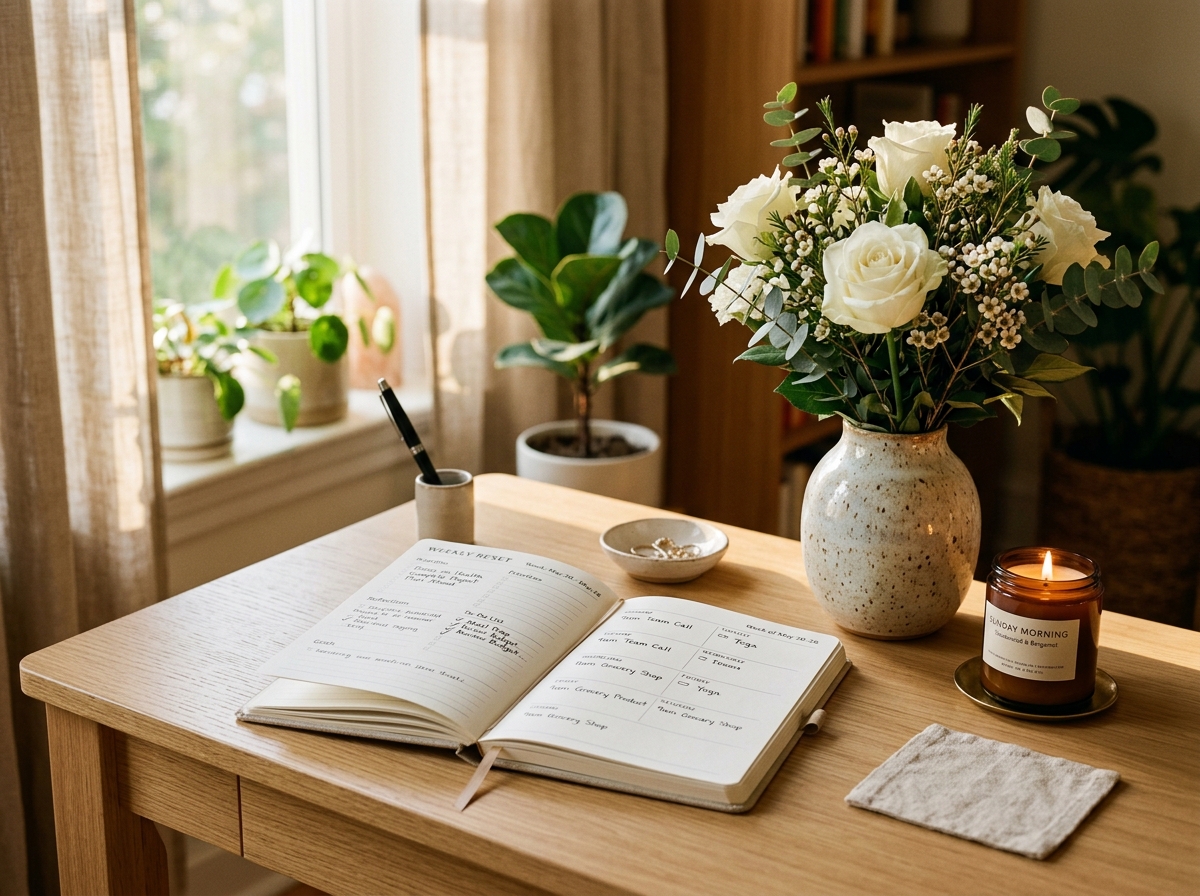
Choose One "Non-Negotiable" Block
Pick one 30–60 minute window each week and treat it the way you'd treat an appointment. This could be:
- A Sunday evening reset (tidy up, plan the week, light a candle)
- A solo coffee shop hour with no phone
- A slower skincare routine with a face mask
- An uninterrupted bath or shower with music instead of a podcast about productivity
The key is scheduling it, not hoping it happens. Put it in your calendar the same way you would a meeting.
A Simple Weekly Self-Care Checklist
- ✔ One screen-free hour
- ✔ One meal eaten without multitasking
- ✔ One form of movement that feels good, not obligatory
- ✔ One moment of connection with someone who fills your cup
- ✔ One hour of true rest with no productivity attached
You don't need to check every box every week. Use it as a gentle guide, not a scoreboard.
Common Mistake: Turning Self-Care Into Another Task
It's easy to accidentally treat self-care like a project — planning the "perfect" routine, buying new products, researching the best method. If this happens, simplify. The goal is to feel cared for, not to perform self-care correctly.
Monthly Self-Care Resets (1–2 Hours)
Once a month, it helps to zoom out. This is less about relaxing and more about realigning.
A Simple Monthly Reset Routine
- Reflect — What drained you most this month? What genuinely helped?
- Release — Let go of one thing that isn't serving you (a habit, an obligation, a mental script like "I should be doing more").
- Reset your space — Tidy one area of your home that affects your daily mood, like your bedroom or entryway.
- Realign — Choose one small intention for the month ahead, not a rigid goal.
This reset doesn't need to be long. Even 60–90 minutes on a quiet weekend afternoon is enough to feel recalibrated.
How to Build This Routine Without Overwhelming Yourself
If this entire guide feels like a lot, start with just one piece:
- Week 1: Pick one daily anchor habit
- Week 2: Add one weekly ritual
- Week 3: Try a transition moment between roles
- Month 2: Add your first monthly reset
Self-care routines that last are built slowly, the same way any habit is. You're not behind if you're only just starting — you're simply beginning at the right pace for you.
TheSelfistry Reminder
You don't need to become a calmer, more disciplined, more "put-together" version of yourself to deserve rest. Self-care isn't something you earn after everything else is done — it's part of what makes everything else possible.
Start small. Protect the pockets of time you already have. And if a day slips by without any of it, that's not failure — that's just a normal week. There's always tomorrow's five minutes.
Conclusion
A self-care routine for busy women doesn't need to be elaborate to work — it needs to be realistic enough to repeat. By layering small daily habits, protected weekly rituals, and occasional monthly resets, you can build a rhythm that fits your actual life, not an idealized one.
You don't need more hours in the day. You just need a few minutes, used on purpose, again and again.