

Most evenings do not have a clear transition built in. Work ends, dinner happens, chores get handled, and then somewhere in between, it is suddenly time for bed — with very little space between “doing” and “sleeping.” No wonder falling asleep can feel harder than it should, even when you are genuinely exhausted.
An evening routine for a calmer night is not about adding an elaborate ten-step checklist to an already crowded schedule. It is about creating a gentle, predictable sequence that signals to your mind and nervous system that the day is winding down, well before your head hits the pillow. When you replace the jarring shift from constant stimulation to forced stillness with a gradual bridge, rest becomes something your body naturally welcomes.
Here is a simple, realistic evening wind-down routine designed to fit ordinary lives — flexible enough to adapt to your evening, whether you have an hour or just fifteen quiet minutes.
Why an Evening Routine Actually Helps
Your nervous system cannot simply flip a switch from problem-solving mode to deep restorative sleep in thirty seconds. Throughout the day, your sympathetic nervous system (“fight or flight”) stays activated by deadlines, screens, and responsibilities. A consistent wind-down sequence gives your brain a reliable cue to activate the parasympathetic (“rest and digest”) state.
A thoughtful evening routine accomplishes three essential things:
- Creates a gradual transition: It bridges the gap between active daytime demands and nighttime stillness, avoiding an abrupt stop.
- Reduces sensory stimulation: It systematically dims bright lights, quietens digital noise, and calms cognitive overload before bed.
- Builds a reliable conditioning cue: Over time, repeating the same simple actions trains your brain to associate those sensory cues with sleep readiness.
“A calmer night does not require an elaborate aesthetic ritual — it requires giving your nervous system permission to slow down before you ask it to sleep.”
A Simple Evening Routine, Stage by Stage
Think of your evening not as a countdown to bedtime, but as three natural waves: setting down the day, easing into your personal space, and drifting off in comfort.
1. Early Evening: Setting Down the Day (1 to 2 Hours Before Bed)
The goal of this window is simple: prevent late-night stress spikes and give your digestive system a head start.
- Finish mentally demanding tasks: Step away from work emails, difficult household planning, or intense conversations. If an urgent thought arises, write it down and close the notebook.
- Opt for a lighter dinner: Digesting a very heavy, spicy, or high-sugar meal late in the evening elevates core body temperature and disrupts deep REM cycles. Eating earlier supports more comfortable digestion.
- Begin dimming your environment: Bright overhead ceiling lights mimic midday sunlight and suppress natural melatonin production. Switch off harsh overheads in favor of low-wattage amber lamps, dimmers, or candles.
2. Pre-Bed Wind-Down: Lowering the Stimulation (30 to 60 Minutes Before Bed)
This is the core sanctuary of your nighttime routine. Guard this half-hour as quiet time to nurture your body and decompress.
- Step away from stimulating screens: Blue light from smartphones and tablets delays melatonin release, but the emotional stimulation of social feeds and group chats is often even more disruptive. If you must use a screen, turn down brightness and avoid emotionally activating content.
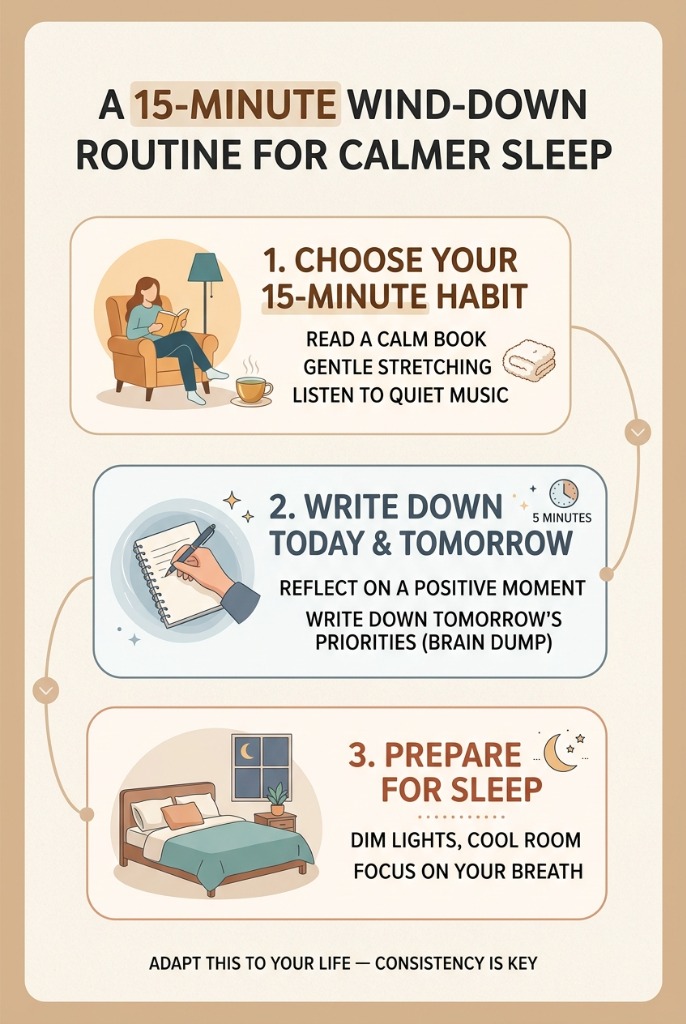
- Do a brief brain dump: Keep a journal or notepad on your nightstand. Spend 3 to 5 minutes jotting down whatever is swirling in your head — to-do lists for tomorrow, fleeting worries, or reminders. Giving your thoughts a tangible resting place prevents them from circling endlessly while you try to sleep.
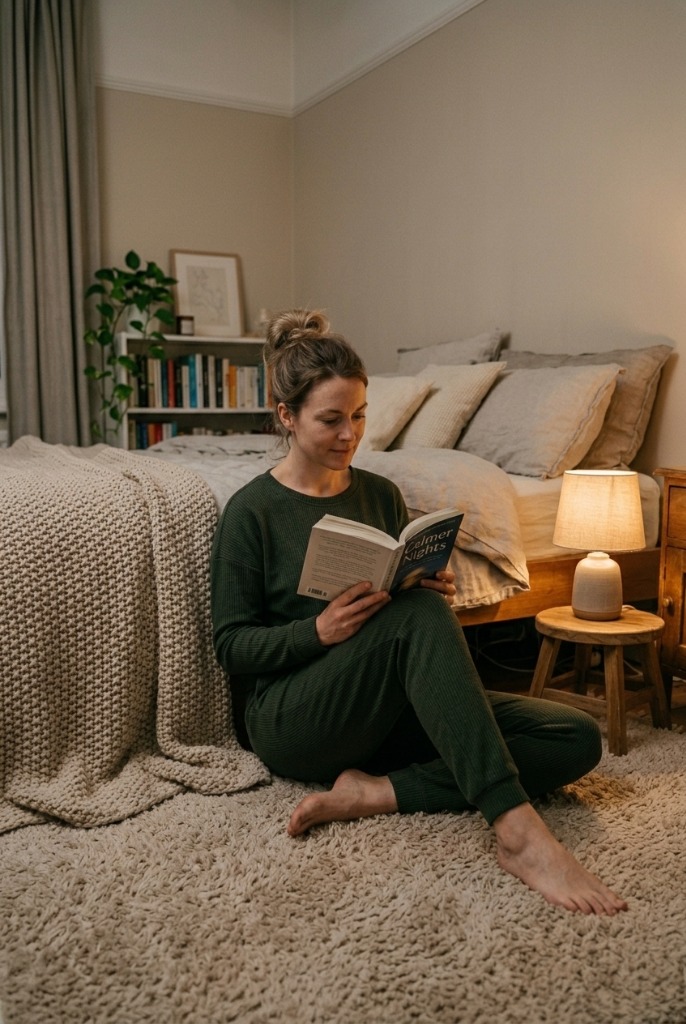
- Engage in a low-effort, calming ritual: Read a calming book, do 5 minutes of gentle floor stretching, sip a warm chamomile tea, or take a warm shower. The temperature drop after stepping out of warm water naturally triggers feelings of sleepiness.
- Prepare your morning runway: Laying out tomorrow's clothes or setting out your coffee mug resolves small logistical decisions in advance, eliminating the feeling of unfinished business.

3. In Bed: Releasing the Need to Perform (Bedtime)
When you slip beneath the covers, your only job is comfort. The pressure to fall asleep immediately is often the very thing that keeps you awake.
- Optimize your sleep sanctuary: Keep the bedroom dark, quiet, and slightly cool (around 65 F / 18 C is ideal for most adults). Cool ambient temperatures signal your internal clock that it is time for deep rest.
- Practice a gentle grounding technique: If your thoughts begin racing, avoid fighting them. Try a simple 4-7-8 breathing pattern (inhale 4 seconds, hold 7 seconds, exhale slowly 8 seconds), or a quick body scan starting from your toes up to your brow. For additional quiet practices, explore our guide on how to practice mindfulness when your mind will not slow down.
- Release the expectation of instant sleep: If you are not asleep within 20 minutes, do not panic. Lying quietly in a dark room resting your muscles is still profoundly restorative. Reframe the moment: you are giving your body stillness, which is valuable in itself.

How to Adapt This Routine to Your Actual Life
Real lives are messy, unpredictable, and rarely follow textbook schedules. An evening routine should serve your well-being, not become another standard you feel guilty for falling short of.
- If your evenings are rushed or unpredictable: Strip the routine down to a 15-minute micro-sequence. Dim one light, write down 3 tasks for tomorrow, take 10 slow breaths in bed, and sleep. Micro-habits done consistently outperform elaborate rituals done rarely.
- If you have caregiving or family demands: Synchronize wind-down cues where possible (such as dimming living room lights together) or claim just 10 quiet minutes for yourself once children or household members are settled.
- If you are building a slower lifestyle: Pair your evening habits with our philosophy in how to create a slower, softer life and building a healthier lifestyle without changing everything.
Common Mistakes That Undermine an Evening Routine
Even with good intentions, a few subtle pitfalls can prevent an evening routine from delivering the calm you are seeking:
- Over-complicating the routine: Adding ten new habits at once creates decision fatigue. Start with two simple actions — like dimming the lights and keeping a notebook on your bedside table — before adding more.
- Treating the routine as a rigid deadline: Feeling stressed because you started your wind-down at 10:15 PM instead of 9:45 PM defeats the entire purpose. Be flexible and forgiving with your timing.
- Doing the routine, but bringing screens into bed: If you dim the lights and drink tea, but spend 45 minutes doom-scrolling social feeds in bed, the stimulating input overrides the physiological calming effect. Keep your bed a designated screen-free zone.
What to Do When You Skip Your Routine
There will be nights where you get home late, fall onto the sofa exhausted, or skip every stage of your routine. That is completely normal human life. A skipped evening does not undo the progress you have made.
When an evening falls apart, take one single slow breath, drink a glass of water, and trust that tomorrow is a fresh start. Long-term nervous system regulation is built through weeks and months of gentle consistency, not through unbroken perfection.

TheSelfistry Reminder
A calmer night does not require a flawless sequence. It requires a gentle, gradual transition from the busyness of the day into genuine rest. You are allowed to build something simple, adapt it to your actual life, and let imperfect nights be part of the journey.
Frequently Asked Questions
How long should an evening wind-down routine be?
Even 20 to 30 minutes of intentional wind-down makes a noticeable difference. While an hour allows for a gradual deceleration, a focused 15-minute routine of dimming lights, a quick brain dump, and quiet breathing is far better than doing nothing at all.
What if I do not have time for a full evening routine?
Focus entirely on the 10 to 15 minutes right before getting into bed. Put your phone on its charger outside arm reach, wash your face with warm water, write down one lingering thought, and take five slow breaths. Micro-routines are highly effective.
Do I need to avoid screens completely before bed?
Not necessarily, though eliminating them in the final 30 minutes is ideal. If you do watch television or read on a tablet, keep the room lights dim, lower device brightness, and avoid news or suspenseful dramas that trigger adrenaline.
What should I do if I cannot fall asleep right away, even with a routine?
Resist the urge to check the clock or get frustrated. Remind yourself that quiet resting in bed still restores your physical energy. If you are wide awake after 25 minutes, get out of bed into dim light, read a book on a comfortable chair for 15 minutes, and return when you feel naturally drowsy.
Is it okay to skip my evening routine sometimes?
Yes, absolutely. Life has unexpected events, travels, and social nights. Consistency across several weeks matters infinitely more than rigid daily perfection. Return to your gentle habits whenever your schedule normalizes.