

If you’ve ever sat down to “practice mindfulness” and ended up more frustrated than calm, you’re not doing it wrong. You’re just doing it with a mind that has a lot going on — which, if we’re honest, is most of us.
A lot of mindfulness advice assumes your thoughts will politely quiet down the moment you close your eyes. For overthinkers, planners, and anyone carrying a long mental to-do list, that’s rarely how it goes. The silence doesn’t feel peaceful. It feels loud.
Here’s the part most beginner guides leave out: mindfulness was never about having an empty mind. It’s about changing how you relate to a full one. Once that shifts, mindfulness stops feeling like something you’re failing at and starts feeling like something you can actually use.

Why “Clearing Your Mind” Isn’t the Goal
The idea that mindfulness means stopping your thoughts is one of the most common reasons people give up on it.
Thoughts are what minds do. Trying to force them to stop is a bit like trying to force a river to stop flowing — it takes enormous effort and usually backfires, leaving you more tense than when you started.
Mindfulness isn’t about silencing your thoughts. It’s about noticing them without immediately following each one, so they pass through instead of pulling you along.
That distinction changes everything about how approachable this practice feels.
Why Your Mind Feels Especially Loud Right Now
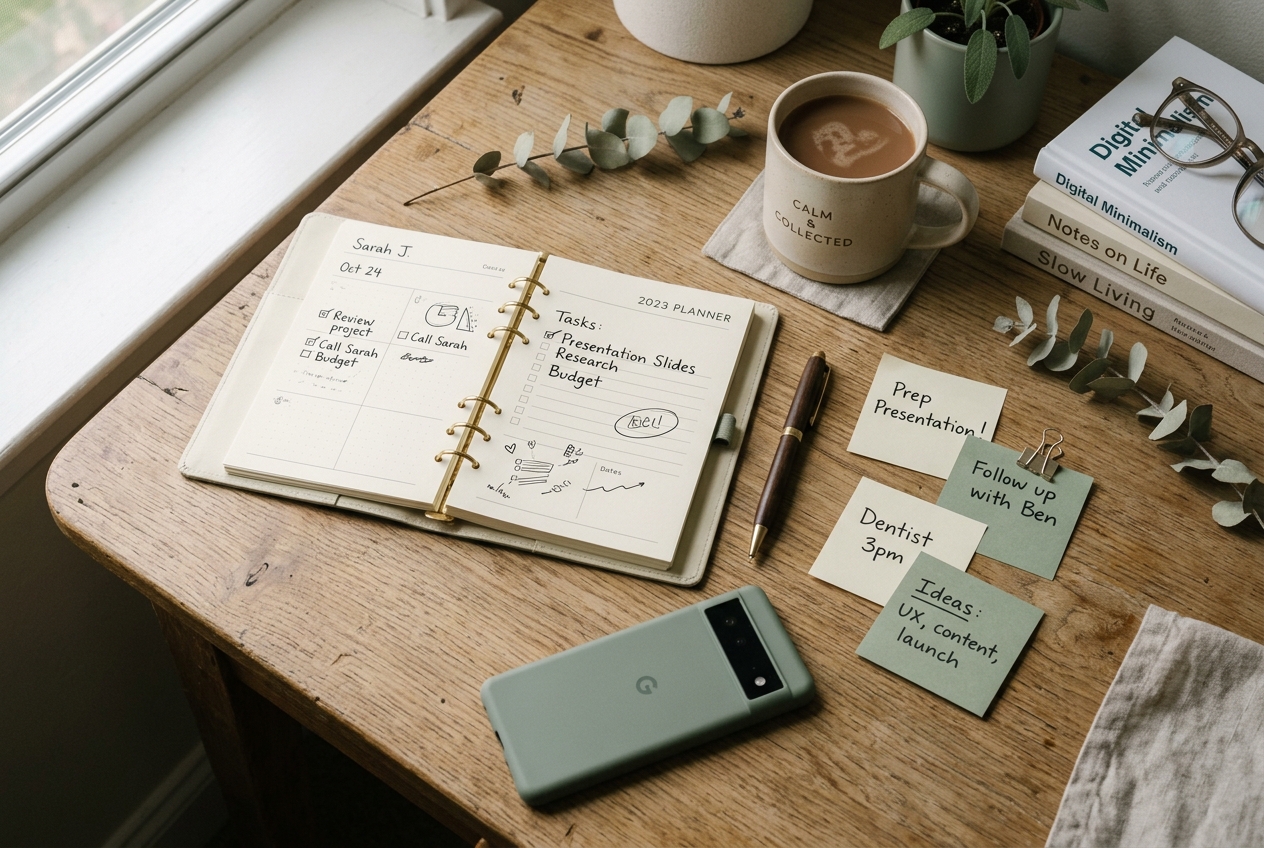
If your mind has felt harder to settle lately, there’s usually a reason — not a personal failing.
- You’re holding a lot of mental load (tasks, decisions, other people’s needs)
- You rarely have moments of true stillness, so when one appears, everything you’ve been suppressing surfaces at once
- Your nervous system is used to stimulation, so quiet can initially feel uncomfortable rather than calming
Understanding this can take the pressure off. A racing mind during stillness isn’t a sign you’re bad at mindfulness — it’s often a sign you needed it.
Mindfulness Techniques for a Busy Mind
These approaches are designed for people who find traditional “just sit and breathe” meditation difficult, especially at first.
1. Name What’s Happening Instead of Fighting It
When a thought pulls your attention, try quietly labeling it instead of engaging with it or trying to push it away.
For example:
- “Planning” — when your mind jumps to tomorrow’s schedule
- “Worrying” — when it drifts to something uncertain
- “Remembering” — when an old conversation replays
This does two things: it creates a small gap between you and the thought, and it turns the thought into something you’re observing rather than something you’re stuck inside.
2. Use Movement Instead of Stillness

Sitting still can actually make a busy mind feel busier, because there’s nothing else to focus on. If stillness feels agitating, try mindfulness in motion instead:
- A slow walk where you notice five things you can see, hear, or feel
- Mindful stretching, paying attention to sensation rather than trying to “think nothing”
- Washing dishes or folding laundry while fully noticing the temperature, texture, and movement involved
Mindfulness doesn’t require sitting cross-legged in silence. It only requires full attention on what you’re doing right now.
3. Give Your Mind a Job
An unstructured mind tends to wander. A mind with a small, simple focus has somewhere to land.
Try:
- Counting your breaths up to 10, then starting again
- Silently naming colors you can see around you
- Tracing the outline of an object with your eyes, slowly
These aren’t distractions — they’re anchors. They give your attention a place to return to each time it drifts, which it will, and that’s expected.
4. Shorten the Practice
Five minutes of mindfulness done consistently is more useful than twenty minutes attempted once and abandoned out of frustration. If your mind is especially busy, start with one to three minutes. You can always extend it later, once the practice feels less like a battle.
5. Try “Noticing” Instead of “Meditating”
If the word meditation feels loaded or intimidating, drop it for a while. Instead, practice simply noticing:
- Notice the temperature of the air on your skin
- Notice the weight of your body in the chair
- Notice one sound in the room you hadn’t registered before
This is mindfulness, without the pressure of doing it “correctly.”
What to Do When Your Mind Still Won’t Settle

Some days, none of it works, and that’s normal — not a sign to give up.
Common mistake: treating a hard mindfulness session as proof that the practice “doesn’t work for you.” In reality, the sessions where your mind resists the most are often doing the most — they’re showing you how much you’ve been carrying.
If a session feels like a struggle:
- Shorten it rather than pushing through
- Switch to a movement-based technique instead of a still one
- Simply acknowledge, “My mind is busy today,” and let that be enough — awareness itself is the practice, even without calm
You’re not aiming for a blank mind. You’re aiming for a slightly different relationship with a full one.
Building a Sustainable Mindfulness Habit
Mindfulness works best as something woven into ordinary moments, not an extra task added to an already full day.

A simple starting rhythm:
- Morning: One minute of noticing your breath before checking your phone
- Midday: A short mindful pause during a task you already do, like making tea or walking to your car
- Evening: Naming one thought without following it, before bed
None of these require extra time. They require attention redirected toward something you’re already doing.

A little reminder from TheSelfistry
A busy mind doesn’t mean you’re doing mindfulness wrong — it usually means you’ve been carrying more than you’ve had space to process. You don’t need silence to practice mindfulness, and you don’t need to master stillness to benefit from it.
Some days will feel calmer than others. Both are part of the practice. What matters isn’t a quiet mind — it’s a gentler relationship with the mind you actually have.
A Final Thought
Mindfulness was never meant to be about achieving an empty mind — it’s about learning to notice a full one without being swept away by it. If traditional stillness hasn’t worked for you, techniques like labeling thoughts, using movement, or giving your mind a small focus can make the practice feel far more accessible.
Start small, expect some resistance, and remember: a racing mind isn’t a sign to stop. It’s usually the exact reason to begin.
Frequently Asked Questions
Stopping thoughts entirely isn’t the goal, and it isn’t realistic for most people. Mindfulness is about noticing thoughts without following them, not eliminating them. The moment you notice your mind has wandered and gently return your attention — that is the practice.
Yes. Movement-based mindfulness — like mindful walking or noticing sensations while doing a routine task — can be just as effective as seated stillness, especially for people with busy or restless minds. The medium matters less than the quality of attention.
Even one to three minutes is enough to start, particularly if longer sessions feel overwhelming. Consistency matters more than duration. A one-minute practice you do every day will serve you far more than a twenty-minute session you attempt once and abandon.
This is common, especially for people who rarely sit with stillness. Starting with shorter, movement-based practices and gradually building up can help make the process feel less intense. If anxiety feels significant, it’s worth exploring this with a therapist or counsellor alongside any mindfulness practice.
No. Mindfulness can be practiced in small moments throughout the day — while walking, eating, or pausing before a task — without requiring a formal daily meditation session. Regular small moments of attention will accumulate into a meaningful shift over time.
You might also enjoy reading
- The Ultimate Self-Care Routine for Busy Women
- A Beginner’s Guide to Mindfulness for Overwhelmed Women
- Simple Evening Wind-Down Routine for Better Sleep
- How to Quiet an Overthinking Mind Before Bed
- Gentle Productivity: How to Get Things Done Without Burning Out